Shopify returns operations
What happens to a garment between the courier and the shelf?
A returned garment is booked in, matched, opened, inspected, graded and reworked before it is sold again. Each step, and where the money leaks.
20 November 2026 · 3 min read · Taimoor ul Hassan, founder, WeaveCycle
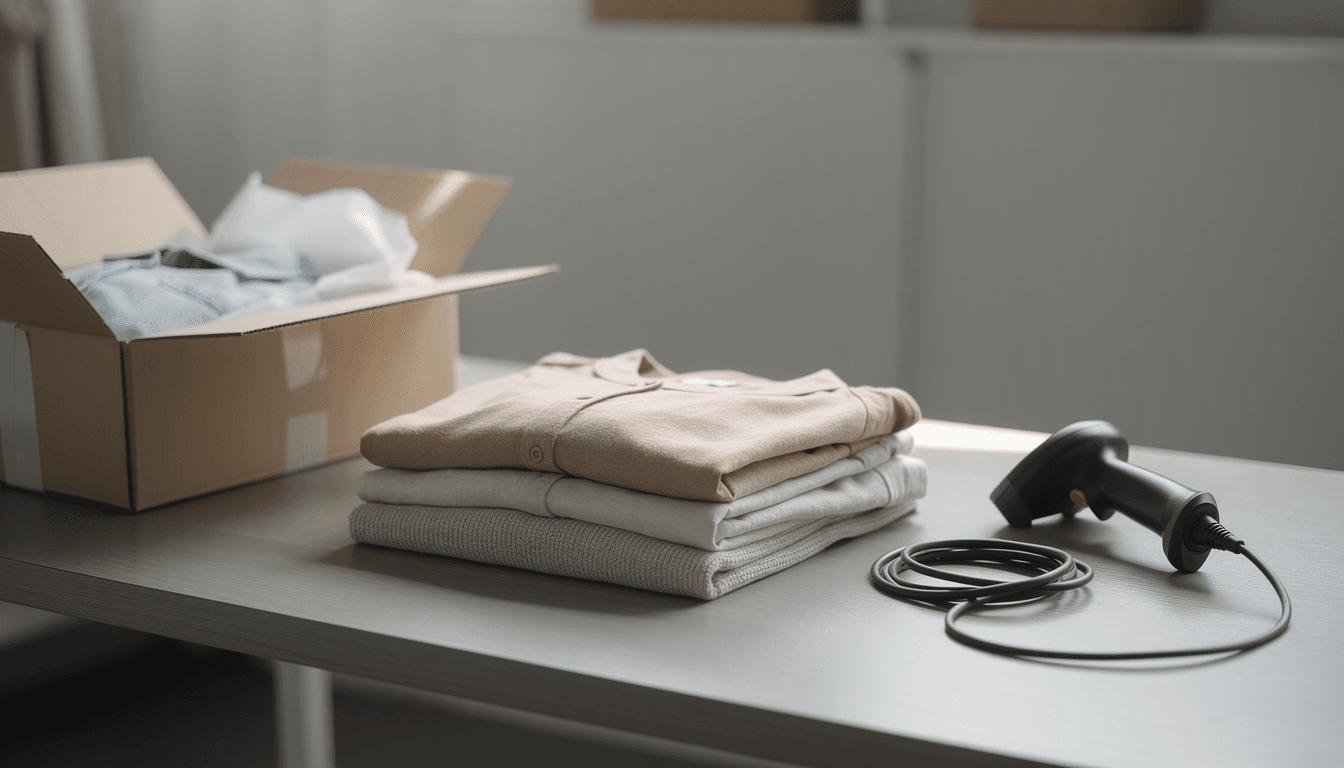
A returned garment goes through six steps before it can sit on a shelf again: it is booked in, matched to its order, opened, inspected, graded, and usually given a little work (steaming, rebagging, a new tag). The grade decides whether it goes back to first-quality stock, to a secondary channel, to repair, or out of sale. Most of the value lost on returns is lost between these steps, while items wait.
1. The parcel arrives
Courier sacks and cartons arrive at the dock. The receiving team scans them against the courier manifest. Parcels that do not match go to an exceptions cage. A "delivered" scan means the parcel arrived, not that anyone has looked inside. See how to stop refunds going out before a return is inspected.
2. It is matched to an order
Before condition matters, someone ties the item to an order line: order number, SKU, size, colour and the reason the customer gave. A barcode on a polybag can scan cleanly while the swing tag inside belongs to a different SKU, so scan the item, not just the bag. If a parcel holds several items, each is matched separately. See how to process a return parcel that holds items from several orders.
3. It is opened and inspected
The inspector checks wear, stains, damage, missing tags and packaging, and smells the item as soon as the bag is open, because steaming can hide odour. Faults are recorded as codes, not free text.
4. It is graded and routed
The grade sets the next queue. A goes back to main stock. B goes to a discount or second-hand channel. C goes to repair or recycling. Items that are not saleable go to quarantine for a documented decision. See the condition grading checklist.
5. It is reworked
Most returned garments need a short step before sale: steaming, lint-rolling, refolding, retagging or a small repair. Items for secondary channels also need new photos and a description that states their condition.
6. It goes back on sale, or leaves
Restocked items return to sellable inventory. Others are listed in the outlet, sent to a repair partner, sold as a lot or sent to a textile sorter. Whatever leaves should leave with a record of where it went.
Where the money leaks
- Manual lookups when an item cannot be matched.
- Double handling when grading and routing happen at different times.
- Vague grading rules that leave items waiting for a supervisor.
- Refunds at receipt that turn into exceptions later.
- Waiting. Stock in a cage earns nothing, and seasonal stock loses value every day.
What the public numbers tell you
Around 20% of clothing bought online in Europe comes back (EEA). In a German survey of online retailers, 93.2% of returned articles were resold as new and 1.3% were disposed of directly by the retailer (University of Bamberg). The EEA estimates 22 to 43% of returned online clothing is destroyed somewhere in the chain; the difference is what happens after items leave the retailer.
No reliable public figure exists for how long this journey takes for fashion returns. Measure your own: days from arrival to decision is the most useful number on this page.
How to fix leaks on your floor
Map each step and who owns it, keep received stock separate from sellable stock, grade and route in one touch, and count the exceptions that stop items going live. See what your warehouse should record on each return and the inspection station setup checklist.
Where WeaveCycle fits
WeaveCycle covers steps 2 to 4: it matches returns to Shopify orders, carries the grade from the customer's photo check (when there is one) to the bench, and recommends a route by your own numbers. Your team confirms and routes. See how it works.